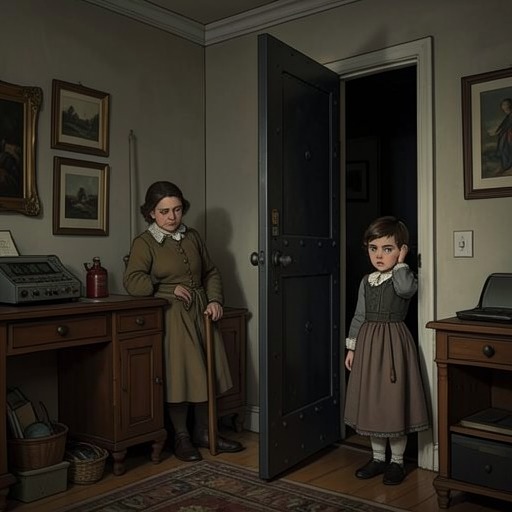
The Kingsley family overstays its visas in the United States
The Sun is Also a StarThe Kingsley family’s visa overstay begins when they remain in the United States after entering on tourist visas, but its consequences reach far beyond a missed departure date. The family’s undocumented status becomes the hinge between Samuel Kingsley’s DUI, federal immigration proceedings, and Natasha Kingsley’s threatened removal from the only home she has known since childhood. Their effort to stay also exposes the distance between a legal test for hardship and the lived meaning of being uprooted.
From a planned visit to an undocumented life
The Kingsleys leave Jamaica for the United States expecting a temporary separation from the people and place they have left behind. Natasha is eight when the family arrives. She initially assumes she will see her relatives again, perhaps at Christmas; she does not understand that remaining after the tourist visas expire will make it impossible for her simply to return and then come back. The family travels to the United States on tourist visas and, when the time comes to leave, stays instead. They have not left the country since.
For Natasha, that decision becomes the condition of ordinary life rather than an abstract immigration status. Years later, she is in her senior year, has friends and plans for prom and graduation, and has begun preparing an application to Brooklyn College. Her mother has spent two years saving for a trip to Florida to buy a stolen-number Social Security card, which Natasha hopes will let her apply for financial aid and perhaps attend SUNY Binghamton or another in-state school. These plans show how the family’s unauthorized presence shapes even routine steps toward adulthood: college is imaginable, but its affordability and application process depend on concealment.
Natasha’s sense of home also sits uneasily alongside the geography of her birth. She says she does not know Jamaica or her relatives there in the way she believes family should be known, and does not have an accent. The family’s move has not erased Jamaica from her history, but it has made return a prospect of estrangement rather than a straightforward homecoming. Her attachment to the United States is made concrete by the years of school, friendships, and plans that would be interrupted by departure.
Discovery and the start of proceedings
The family’s undocumented status becomes an immediate crisis after Samuel’s DUI. Natasha connects the sequence in blunt terms: her father’s brief public prominence leads to the DUI, which leads to the family being discovered and to her losing the place she calls home. She insists that his mistake is his responsibility, yet its immigration consequences fall on the household. The distinction between individual culpability and shared family exposure is central to the crisis: Natasha says the family has committed no crimes apart from Samuel’s DUI, but the overstay places all of them within removal proceedings.
A few weeks after Samuel is arrested, the family receives a Notice to Appear from the Department of Homeland Security. Natasha later goes to the United States Citizenship and Immigration Services office in downtown Manhattan, although that office does not have jurisdiction over the relief she seeks. She is desperate enough to hope that someone, or even fate, can help her remain. The trip follows a sequence of formal procedures that has already narrowed the family’s options, but she does not yet know where else to turn.
At a legal office, Natasha is asked to complete forms covering criminal, political, and security-related questions, the history of the deportation process, and a full account of her time in the country. She answers that the family entered on tourist visas, stayed after they were due to leave, and have not departed since. The questionnaire’s demand for facts sits beside a more personal question about what America means to her, why she wants to stay, and how she might contribute to the country. Jeremy Fitzgerald’s staff member explains that such material could help humanize the family’s case. The contrast is telling: Natasha’s life must be translated from years of belonging into facts and arguments a legal process can use.
Hearings, hardship, and Voluntary Removal
At the Master Calendar Hearing, Samuel does not accept Voluntary Removal. The family instead researches Cancellation of Removal, hoping that Peter’s United States citizenship might provide a way to remain. To qualify, Samuel must have lived in the country for at least ten years, demonstrated good moral character, and shown that removal would cause extreme hardship to a spouse, parent, or child who is a United States citizen. Peter was born almost exactly nine months after the family moved to the United States, making his citizenship a possible legal foothold for the family.
The family hires the cheapest lawyer they can find and takes the Cancellation of Removal argument to a Merits Hearing. The claim fails on the demanding hardship standard. Returning to Jamaica would not put Peter’s life in danger, and the psychological harm of uprooting him from the place he knows is not treated as sufficient, even though Peter himself does not understand the danger to his home in those terms. The legal test separates demonstrable extreme hardship from the family’s broader experience of loss; Natasha’s fear that Jamaica is unfamiliar and that her own life is rooted in the United States does not by itself overcome that threshold.
After the judge denies the case, Samuel accepts Voluntary Removal. Natasha argues for an appeal, but their lawyer advises against it, saying they have no case and are out of options. Leaving voluntarily, the lawyer explains, would avoid a deportation on their records and preserve some hope of returning one day. Voluntary Removal is therefore presented as a constrained choice, not a freely desired departure: it offers a less damaging record while making the family’s separation from its established life imminent.
Belonging and the cost of departure
When Natasha asks why she must pay for her father’s mistake, her anger identifies the family structure of the consequence. Samuel’s DUI initiates scrutiny, but his wife and children share the threat of removal; legal responsibility and emotional cost do not fall on the same person in the same way. By the time Natasha seeks help, the judge has denied the family’s case and the decision to leave has been made under the pressure of having no viable alternative.
The effects of that pressure are visible in the ordinary places Natasha calls hers. Her Brooklyn neighborhood is made up of closely packed shops, Jamaican restaurants, discount clothing stores, beauty salons, check-cashing businesses, and small houses; she feels ashamed that its run-down appearance might be what Daniel Bae sees, then recognizes the shame itself. The scene shows an attachment formed through familiarity, not through an idealized picture of the city. Her choice to wear an Afro, despite her mother’s concern that it is not professional-looking, likewise reflects a personal claim to make choices within the life she has built in the United States.
The family’s overstay thus names both a legal fact and a prolonged condition of belonging without secure permission. It has lasted long enough for Natasha to grow up, imagine college, and understand America as home, while leaving the family vulnerable to proceedings triggered by Samuel’s conduct. When Jeremy Fitzgerald tells Daniel Bae that a judge will not overturn the Voluntary Removal and that Natasha is to be removed that night, the procedural history reaches its personal endpoint: a family’s decision to remain after a tourist visit has become the machinery through which Natasha may be forced to leave the country she knows.